
Reviewed · KAMPALA TOURS
Kampala guided walking tour
Kampala reveals itself best on foot, where a mosque minaret, crowded market, royal palace, taxi hub, and craft stalls fit into one fast-moving city walk. I like the way this tour takes you beyond the usual photo stops, and I especially like the help you get finding your way through Owino Market and other hard-to-navigate corners. Fatumah has earned praise for her patience, flexibility, and care with safety.
The main consideration is pace. Four hours covers a lot, and two important entries, Gaddafi National Mosque and Kabaka’s Palace, cost extra. You should also expect city noise, busy market passages, and plenty of walking rather than a polished sightseeing circuit.
Key points at a glance
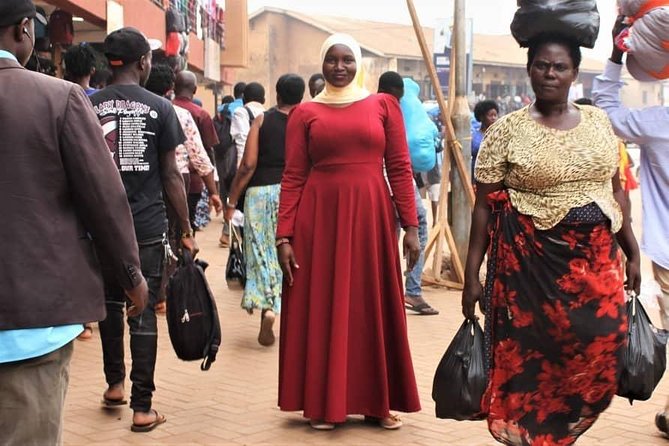
- Gaddafi National Mosque begins the story: Pay the entry fee, follow the Islamic dress code, learn about the mosque, and climb the minaret for a fine view over Kampala.
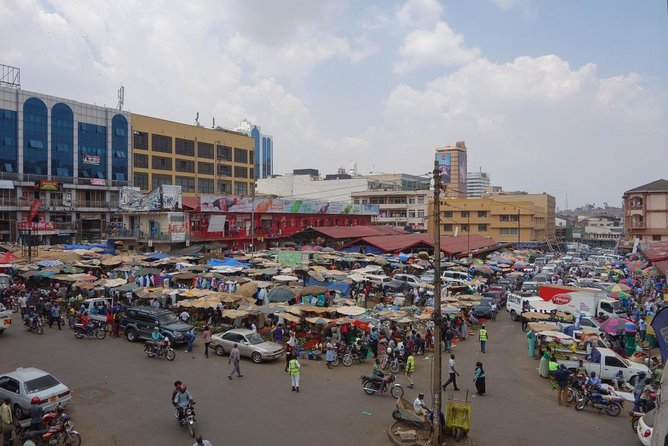
- Owino Market is the real city lesson: This huge market sells food and second-hand goods, and a guide is useful for finding your way through it.
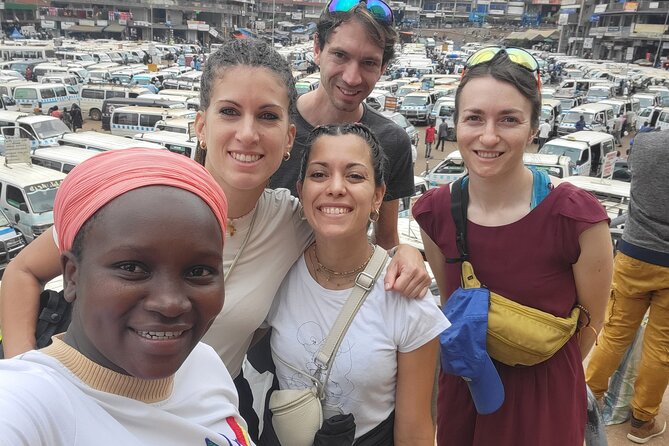
- You see Kampala as people use it: The Old Taxi Park shows the city’s main public transport rhythm rather than a staged attraction.
- The route connects Uganda’s faiths and history: The mosque, Hindu temple, royal palace, independence monument, and national theatre each add a different piece.
- Food and shopping are easy to add: You can stop for local food, a rolex, coffee, spices at Nakasero Market, or souvenirs at Bagala Craft Market.
- The tour earns strong marks for personal attention: Fatumah is described as friendly, patient, flexible, and careful with safety.
Why this walk gives you a useful first look at Kampala

At $35 per person, this is not simply a monument checklist. You are paying for a guide who can connect Kampala’s religious buildings, political landmarks, markets, public transport, and shopping streets in one four-hour route.
That matters in Kampala. A city can be easy to admire from a car and hard to understand from one. Walking puts you close to daily trade and movement. You see where people buy food, where second-hand goods change hands, how public transport works, and how several religious traditions share the capital.
I also like the flexibility built into the experience. Fatumah has helped visitors make practical stops for cash and stamps, and she has adjusted the walk to suit personal interests. That can be more valuable than another fixed photo stop, especially early in your visit when you are still working out how the city functions.
The route is not a quiet stroll through a historic district. Kampala is active, crowded in places, and full of crossings, market passages, and changing street scenes. Wear comfortable shoes, keep your belongings secure, and leave room for the walk to feel a little untidy. That is part of what you are coming to see.
More things to do in Kampala:
- Kampala’s Best Experience walking tour
★ 5.0 · 137 reviews - Kampala Walking City Tours (Women Guided)
★ 5.0 · 115 reviews - Kampala Walking Tour (3 Hours) with Optional Gaddafi Mosque Visit
★ 5.0 · 112 reviews
Starting at Gaddafi National Mosque
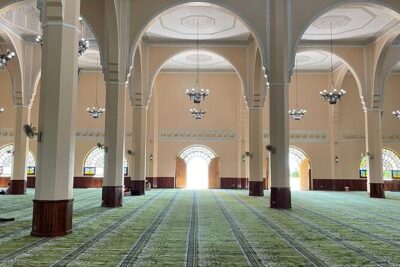
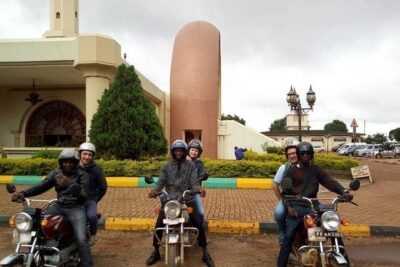
The meeting point is Uganda National Mosque, also called Gaddafi National Mosque. Entry is not included, so you should budget for that fee separately from the $35 tour price.
You will change into the required Islamic dress code before entering. The guide then explains the mosque’s history and takes you into the minaret. The minaret is one of the tour’s best moments because it gives you a high view over Kampala, a useful way to get your bearings before walking into the city.
This stop also sets the tone for the day. You are not only looking at a building. You are learning how one of Kampala’s major religious places fits into the city around it.
Allow a little patience here. The dress change and entry process take time, and the minaret visit adds an element beyond a quick exterior photograph. If you want the most from the mosque, listen to the explanation rather than treating it as a brief starting point.
Kabaka’s Palace and the royal story
The next major stop is Kabaka’s Palace, which also has a separate admission fee. A guided palace tour is included in the route, but the entry payment is not included in the booking price.
This gives you a look at Uganda’s royal tradition and the role of the Buganda kingdom. The palace adds political and cultural context that you will not get from the markets alone. It also helps explain why Kampala is more than a national capital in the modern administrative sense.
I would confirm the entry cost before setting out and carry enough local currency or a suitable payment method. The tour description does not give the separate mosque or palace prices, so the headline $35 should not be treated as the full cost of every stop.
Owino Market, where the city gets practical
Owino Market is one of the strongest reasons to choose a walking guide. It is described as Kampala’s biggest market, selling food as well as second-hand goods. This is not a tidy market arranged for easy sightseeing. It is a place where a local guide can help you move through the maze and explain what you are seeing.
You may find food stalls, used clothing, and other second-hand items as you pass through. The appeal is the direct look at ordinary buying and selling, not a perfect shopping experience. If you want photographs, ask before taking them and follow your guide’s lead.
The market admission is included. That is useful because this stop is central to the experience, not an optional add-on that you must pay for separately.
Several aspects of the tour come together here: local orientation, market etiquette, safety, and the chance to see Kampala outside formal attractions. Fatumah is especially praised for guiding people through markets that can be difficult to navigate alone. If you are nervous about entering a large unfamiliar market, this is where the guide’s value becomes clear.
More walking tours in Kampala:
- Steve Kampala Walking tours (Airpals Safaris tour)
★ 5.0 · 89 reviews - Inside Kampala Walking Tour (Female Guided)
★ 5.0 · 52 reviews - Kampala: City Guided walking sightseeing Tour
★ 4.7 · 52 reviews - Kampala Heart of Walking Adventure
★ 5.0 · 43 reviews
Old Taxi Park and Kampala’s daily movement
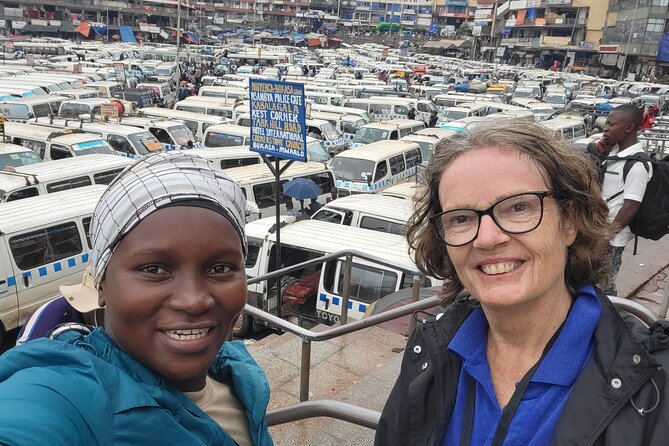
The Old Taxi Park shows how many people get around Kampala by public transport. The tour includes a guided visit, and admission is included.
This is a useful stop because transport tells you a great deal about a city. You are seeing a working part of Kampala, not a display built for visitors. The guide can explain where people board cars and how the public system fits into daily life.
The taxi park may feel noisy and crowded, particularly if you are used to quiet sightseeing areas. That is also its strength. Keep close to your guide and pay attention to your belongings. Fatumah has been praised for looking after safety, which is helpful in places with heavy foot traffic.
The route may offer a break at a restaurant after or around this part of the walk. You can try local food, eat a rolex, or have coffee from a balcony with a view over the city. This stop is optional and costs extra, so you can decide based on your appetite, budget, and remaining time.
A rolex is a Ugandan street-food favorite made with eggs and a chapati. The tour information does not promise a specific restaurant or menu, so treat this as an available option rather than a guaranteed meal stop.
A Hindu temple and Kampala’s religious mix

The Hindu temple adds another side of Kampala’s faith traditions. Here you learn about Hinduism and how it arrived in Uganda.
Placed after the mosque, this stop gives the route a useful sense of comparison without forcing the places into one story. You begin with a major Islamic site, then see a Hindu religious presence, while the palace, monuments, and markets add still more layers.
The temple is valuable for travelers who want cultural context rather than only architecture. Ask questions as you go, especially if this is your first time learning about Hindu communities in Uganda. The supplied tour details do not specify an additional temple admission fee, so the guide can clarify any arrangements on the day.
Nakasero Market for food and spices
Nakasero Market is the food-focused market stop. Admission is included, and you can shop for spices if you want to take something home.
I like this part of the route because it balances Owino Market. Owino is broad and includes second-hand goods, while Nakasero gives you a closer look at food shopping and ingredients. A spice purchase can be a more useful souvenir than a random trinket, though check your own airline and destination rules before packing food products.
The guide can help you understand what you are looking at and how to move around the market. If you are interested in cooking, ask about unfamiliar ingredients. If you are not shopping, the market still gives you a practical view of how food enters the city’s daily routine.
Monuments that explain Uganda’s past
The walk then turns toward Kampala’s public monuments. At the Sir Edward Muteesa monument, you learn why the first president of Uganda is commemorated there. This stop ties national history to the Buganda royal story introduced at Kabaka’s Palace.
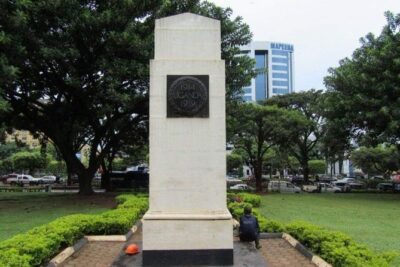
The Independence Monument follows, with an explanation of Uganda’s road to independence. It is an important stop even if you are not a monument enthusiast because it gives the rest of the city’s political story a clear reference point.
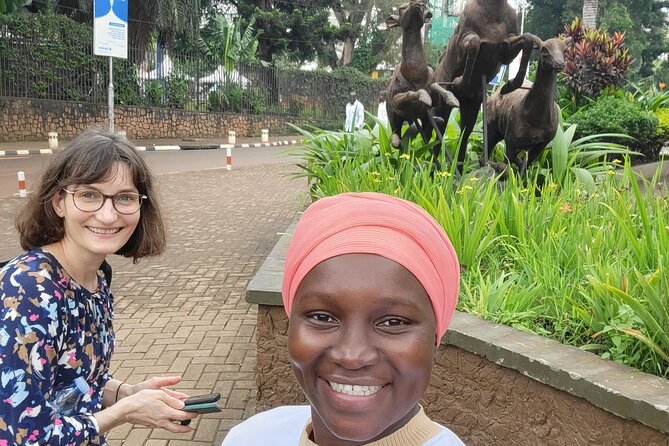
You also visit the gorilla monument, which represents one of Uganda’s main attractions and points toward the country’s national parks. Uganda has ten national parks that can be visited, and the monument connects Kampala with the wildlife experiences that bring many people to the country.
The Impala monument explains the origin of Kampala’s name. It is a small but memorable detail, the kind of fact that helps the city become easier to remember after the walk is over.
These monuments work best when your guide supplies the context. On their own, some might take only a few minutes to view. Together, they create a compact introduction to Uganda’s political figures, independence, wildlife identity, and the name of its capital.
National Theatre and Bagala Craft Market

The National Theatre is described as the oldest theatre in Uganda. It displays portraits of kings from Uganda’s five main kingdoms, giving you another way to see the country’s traditional political structure.
This is a good cultural stop near the end of the walk. After markets, transport hubs, religious sites, and monuments, the theatre brings attention back to performance and the country’s kingdoms. The tour details do not promise a show, so you should expect a visit and explanation rather than a theatre performance.
The final stop is Bagala Craft Market. Admission is included, and this is where you can shop for souvenirs. You may find that the best time to buy is near the end, once you have seen more of Kampala and have a clearer idea of what you want.
Keep your budget in mind. Craft markets are places to compare items and prices, and buying is optional. If you need help with bargaining or want to understand what you are purchasing, ask the guide. The tour ends here, so plan any onward transport before you start or confirm the best next step with the guide.
What the $35 price really covers
The $35 price is reasonable if you want an English-speaking guide to handle the route, explain the city, and help you through the markets. The included admissions cover Owino Market, the Old Taxi Park, Nakasero Market, Independence Monument, and Bagala Craft Market.
You pay extra for Gaddafi National Mosque and Kabaka’s Palace. Food, drinks, shopping, and any optional restaurant stop are also separate. That makes the final cost depend on your choices, but the main added expenses are clear from the start.
The strongest value is not any single monument. It is the guide’s local navigation and interpretation. Fatumah has been singled out for being friendly, patient, flexible, and attentive to safety. She has also helped with practical needs such as finding cash and stamps, which can be useful when you are settling into Kampala.
The tour allows free cancellation up to 24 hours before the start for a full refund, and you can reserve now and pay later. Starting times vary, so check availability when booking.
Who will enjoy this walking tour most
I would choose this for a first visit to Kampala, especially if you want daily life rather than a short list of formal sights. It suits you if you enjoy markets, local transport, religious places, history, and small cultural details.
It is also a good fit if you prefer asking questions as you go. The guide can respond to personal interests, and the pace has been described as easy rather than rushed. That is helpful because the route contains many stops and could otherwise feel like a race.
You may prefer another type of outing if you want a quiet, highly structured sightseeing day or if walking through markets is not appealing. The tour covers a lot in four hours, and the city sections can be busy. You should also be comfortable with the required mosque dress code and with paying separately for the mosque and palace.
Should you book it?
Book this tour if your goal is to understand Kampala through its working streets, markets, faiths, transport, monuments, and shopping. The best reasons are the local guidance through Owino Market, the minaret view from Gaddafi National Mosque, the palace visit, and the chance to see places you might not find easily on your own.
Before booking, set aside extra money for the mosque and palace, wear walking shoes, and decide if you want to add food or coffee. If you want a friendly guide who can adjust the route to practical needs, Fatumah is the name most often associated with this experience. For a first look at Kampala, $35 buys more than sightseeing. It buys orientation.
FAQ
Where does the Kampala walking tour start?
The tour starts at Uganda National Mosque, also known as Gaddafi National Mosque.
How long does the tour last?
The walking tour lasts four hours.
What language is the tour offered in?
The live tour guide speaks English.
Is entry to Gaddafi National Mosque included?
No. Admission to Gaddafi National Mosque is not included in the $35 price.
Is entry to Kabaka’s Palace included?
No. Kabaka’s Palace requires a separate admission payment.
Which market visits are included?
The route includes Owino Market and Nakasero Market. Admission to both markets is included.
Does the tour visit the Old Taxi Park?
Yes. The tour includes a guided visit to Kampala Old Taxi Park, and admission is included.
Can I cancel the booking?
Yes. You can cancel up to 24 hours in advance for a full refund. You can also reserve now and pay later.
Just added around Kampala
- Kampala Pub Crawl | Uganda | 4 hours★ 5.0 · 4 reviews
- Kampala Urban Adventure – Walking Tour★ 5.0 · 3 reviews
- Kampala Guided walking Tour★ 5.0 · 4 reviews
- Day and Night City Tours in Kampala★ 5.0 · 4 reviews
- Kampala:Guided walking tour★ 5.0 · 7 reviews
- The best Kampala walking experience tour★ 3.7 · 4 reviews
- Kampala: Private Guided City Tour with vehicle Transfers★ 4.7 · 3 reviews
- Kampala: Luxury City Tour with Hotel Pickup and Drop-Off★ 5.0 · 3 reviews
Kampala Tours, compared.

Free Female Guided Walking Tours Kampala (3 Hours)
Read our review →Browse the lists this tour appears in