
Reviewed · KAMPALA TOURS
Kampala cultural tour
Kampala’s story comes into focus through its royal tombs, old transport hubs, mosques, and political landmarks. This tour connects those pieces to the history of the Buganda Kingdom, Uganda’s most important traditional kingdom, instead of treating the capital as a string of disconnected sights.
I like the way the tour brings you inside places such as the Kabaka’s Palace torture chambers, and I like the private transport, which saves you from sorting out Kampala’s traffic between stops. The main consideration is timing: the experience is described as lasting anywhere from three to five hours, so you should keep a flexible part of your day free.
Key things to know before you book
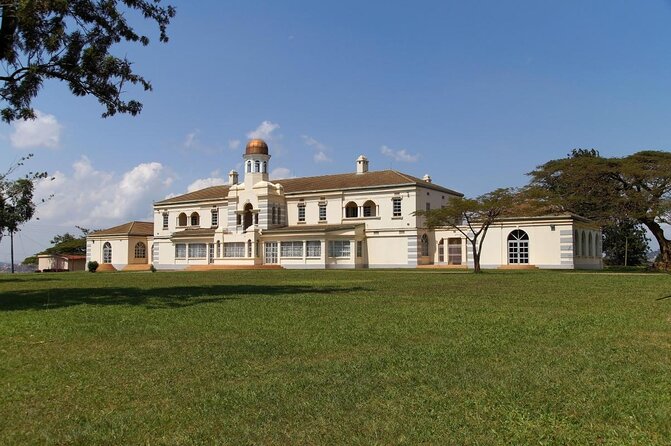
- You visit three major Buganda sites: Wamala King’s Tombs, Kasubi Tombs, and Kabaka’s Palace.
- Guide Twaha is a key part of the experience: He explains Uganda’s history, clans, religion, and royal traditions in clear detail.
- The palace stop has a difficult side: The Iddi Amin torture chambers add important context, but they may be upsetting.
- Gadaffi Mosque gives you a broad city view: You’ll learn about Kampala’s original seven hills while seeing the city from above.
- Private transport connects the stops: That makes a multi-site tour far easier than arranging separate rides.
- The price is $55 per person: Admission fees at several sites, lunch, tips, and souvenirs are extra.
Seeing Kampala through the Buganda Kingdom
Kampala is not just Uganda’s national capital. It is also the historic center of Buganda, a kingdom with its own kings, clans, customs, political structures, and sacred burial grounds.
That makes this a useful first tour of the city. You are not simply checking off a mosque, a palace, and two tombs. Your guide uses each place to explain how royal power, religion, colonial-era change, independence, and modern city life connect.
The tour is private, so only your group takes part. That matters here because the subject is detailed. You can pause to ask about a clan, a royal custom, the seven hills, or the role of the kingdom today without trying to keep up with a large crowd.
Guide Twaha receives especially strong praise for his clear explanations and flexible approach. He has been described as offering useful detail about Uganda’s history and local tribes, while also making solo visitors feel safe and welcome. Another guide may lead the tour, but Twaha is the name most closely associated with the experience.
The meeting point is the post office in Kampala. From there, private transport carries you between the sites. Kampala traffic can make short distances take time, so the vehicle is more than a comfort. It keeps the route practical.
More things to do in Kampala:
- Kampala’s Best Experience walking tour
★ 5.0 · 137 reviews - Kampala Walking City Tours (Women Guided)
★ 5.0 · 115 reviews - Kampala Walking Tour (3 Hours) with Optional Gaddafi Mosque Visit
★ 5.0 · 112 reviews
Wamala King’s Tombs and Kabaka Ssuuna’s grave
The first major stop is Wamala King’s Tombs, where you learn about the burial traditions of the Buganda monarchy and see Kabaka Ssuuna’s grave.
This is a good opening because it introduces the kingdom through its royal line. Your guide can explain the importance of the kabakas, the kings of Buganda, and how royal burial places carry both historical and cultural meaning.
Plan on about 40 minutes here. The admission ticket is not included, so you should expect to pay the site fee separately. The supplied information does not give the exact fee, so ask when booking or at the meeting point if you need to keep a close eye on costs.
Wamala is best approached as a cultural site, not just an old building or photo stop. Listen for the details about royal succession, burial customs, and the way Buganda remembers its former rulers. Those points help prepare you for Kasubi Tombs, which presents the royal story on a larger scale.
Kasubi Tombs and the four royal burials
Kasubi Tombs is one of the emotional centers of the tour. The site contains the burial grounds of four Buganda kings, known as kabakas, and it offers a direct way to understand the continuing importance of the monarchy.
You will spend about 40 minutes here, with admission charged separately. The visit can feel more reflective than the city stops because it is a place of burial and memory. Give yourself time to listen rather than rushing through for photographs.
The value of this stop lies in the explanation. Without a guide, you might see a historic burial site and miss the meaning behind the royal line, the traditions, and the relationship between Buganda identity and Uganda as a modern country.
One couple found this visit especially moving, and that response makes sense. Kasubi is not only about architecture or dates. It brings family, kingship, faith, and national history into the same space.
Your guide can also help you understand the distinction between Uganda as a country and Buganda as a kingdom. That distinction is one of the most useful ideas on the tour. It gives you a better frame for the palace, the parliament, and the other royal sites later in the day.
Kabaka’s Palace and the Iddi Amin torture chambers
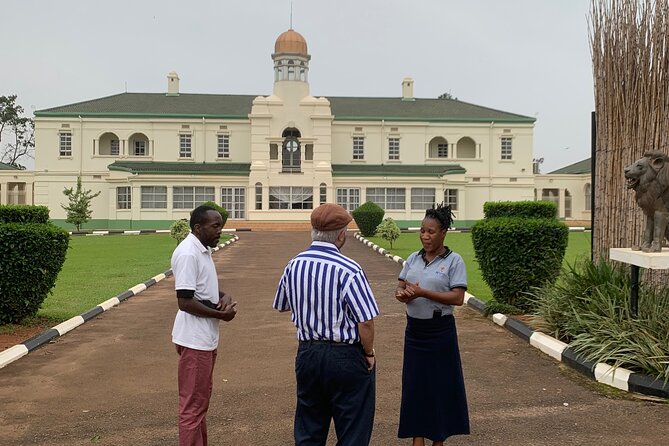
Kabaka’s Palace brings the story into the modern political era. Here you learn about the Buganda Kingdom’s historical background, the royal mile, the kings lake, Bulange Parliament, and the totems of Buganda.
The palace stop also includes the Iddi Amin torture chambers. This is the most confronting part of the route. The chambers connect the palace grounds with Uganda’s violent political past, and the guide explains what happened there rather than leaving you to guess from the setting.
I appreciate that this stop does not present history as a polished royal story. The tombs show tradition and continuity. The palace shows royal authority. The torture chambers show how political violence affected that same setting. Taken together, the three stops give you a more honest picture of Uganda’s past.
Allow about 40 minutes, though the full visit may feel short if you have many questions. The admission fee is not included. If difficult historical sites are not your preference, you should know this detail before booking. If you want a tour that deals with Uganda’s past directly, it is an important part of the route.
The references to royal mile, kings lake, Bulange Parliament, and Buganda totems also widen the focus beyond one building. You get a sense of the institutions, symbols, and places tied to the kingdom.
A completely different kind of day out in Kampala:
- Steve Kampala Walking tours (Airpals Safaris tour)
★ 5.0 · 89 reviews - Kampala: City Guided walking sightseeing Tour
★ 4.7 · 52 reviews - Inside Kampala Walking Tour (Female Guided)
★ 5.0 · 52 reviews - Kampala boda boda tours [motorbike tours].
★ 5.0 · 51 reviews
Gadaffi Mosque and Kampala from above
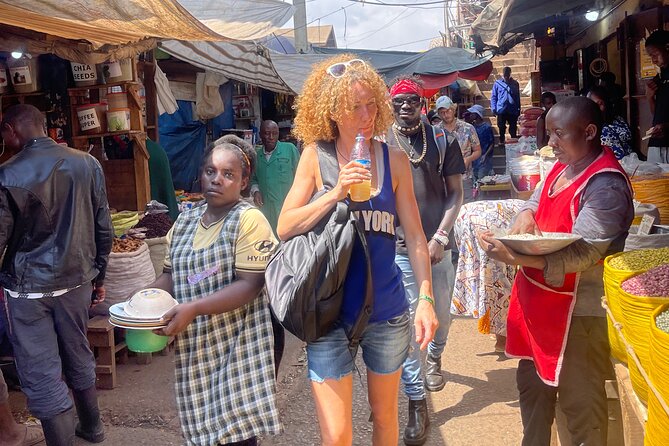
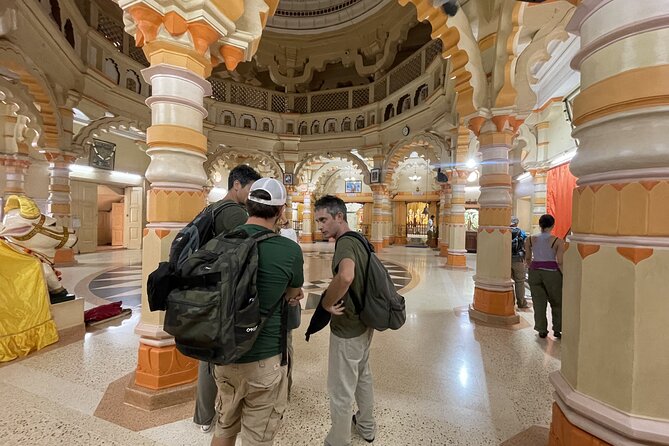
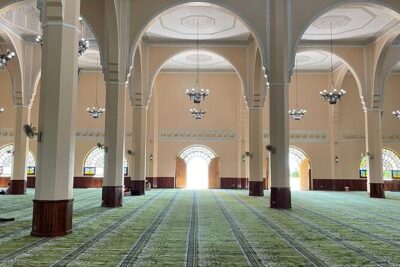
Gadaffi Mosque changes the pace. The mosque offers a 360-degree view of Kampala, along with an explanation of the seven hills that originally made up the city.
This is one of the tour’s best location-based lessons. Kampala can feel confusing when you move through it at street level. From above, the city’s shape makes more sense, and the seven-hill story gives you a simple way to understand its origins.
Admission is included at this stop. You should still follow any clothing or conduct rules required at the mosque, although the supplied tour details do not list specific requirements.
The mosque also adds a religious dimension to a route that has already covered royal traditions and political history. One of the tour’s strengths is this range. You are not shown only monuments linked to one faith, one political period, or one social group.
The 360-degree view is weather dependent in practical terms, though no weather policy is provided. On a clear day, it should be a useful place to get your bearings. Take a moment to ask your guide to point out the hills and explain how the city expanded beyond its original core.
The Independence Monument and Old Taxi Park
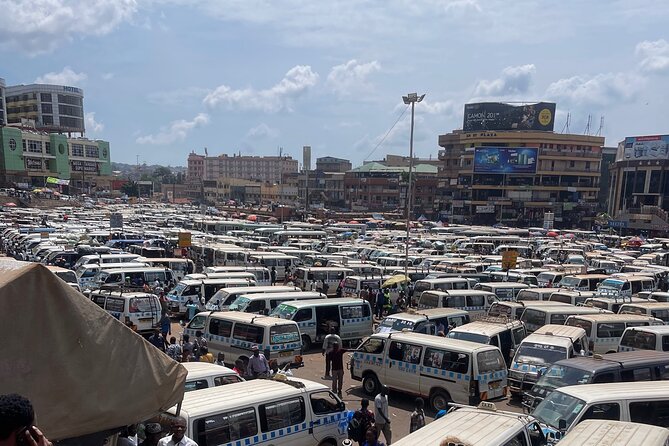
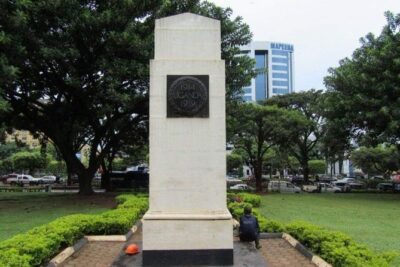
The Independence Monument is a short five-minute stop. Admission is free, and the monument provides a quick introduction to Uganda’s story before and after independence.
Do not expect a long museum visit here. This is a compact landmark stop, useful for placing the royal and colonial-era material in a national frame. Your guide can connect the monument to the country’s changing political identity.
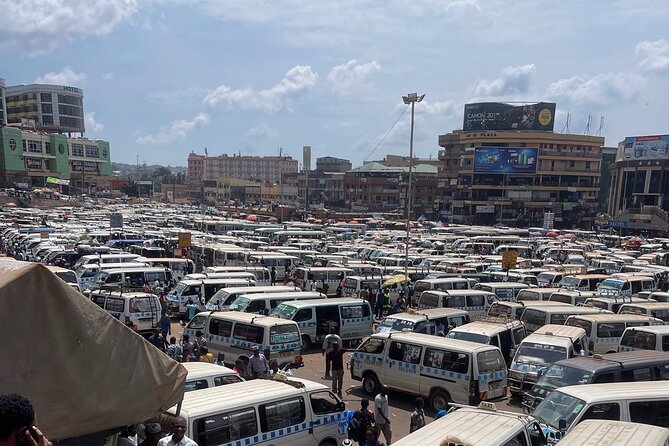
Old Taxi Park is also a short five-minute stop. It explains Uganda’s transport system and gives you a glimpse of how people move around Kampala.
Again, the value is context rather than sightseeing spectacle. The taxi park is part of everyday city life, while the tombs and palace represent royal history. Including it prevents the tour from becoming too focused on formal monuments.
These brief stops may feel rushed if you want detailed exploration. On the other hand, they work well as quick orientation points within a route that already has three longer historical visits. I would treat them as supporting stops, not the main reason to book.
What $55 gets you, and what it does not
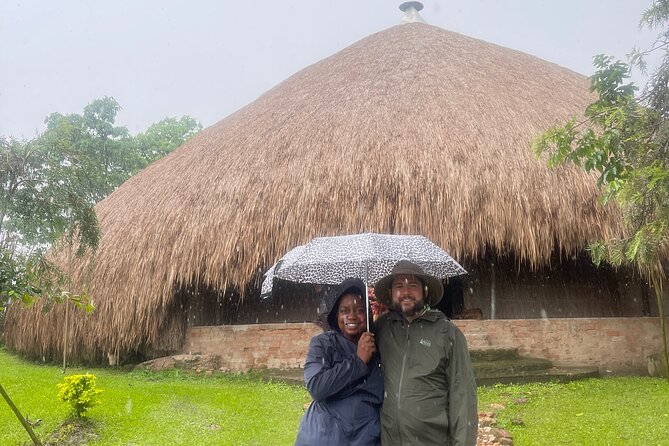
At $55 per person, the tour offers a private vehicle, a guide, and a route that covers several important parts of Kampala and Buganda in one outing.
The value is strongest if you want help making sense of the city. Arranging separate rides to Wamala, Kasubi, Kabaka’s Palace, Gadaffi Mosque, the Independence Monument, and Old Taxi Park would take planning and time. A private vehicle also lets you move between sites without repeatedly negotiating transport.
The price does not include lunch, tips, souvenirs, or admission at Wamala King’s Tombs, Kasubi Tombs, and Kabaka’s Palace. Gadaffi Mosque is included, while the Independence Monument and Old Taxi Park are free.
Because exact admission prices are not provided, bring some extra money beyond the $55. You should also plan for food separately. The tour length can cover a large part of the day, especially if Kampala traffic slows the route.
The experience is generally described as taking three to four hours, while the highlights give an estimate of around five hours. I would plan for the longer figure. That is the safer choice if you have a flight, meeting, or another timed activity afterward.
Who will get the most from this tour
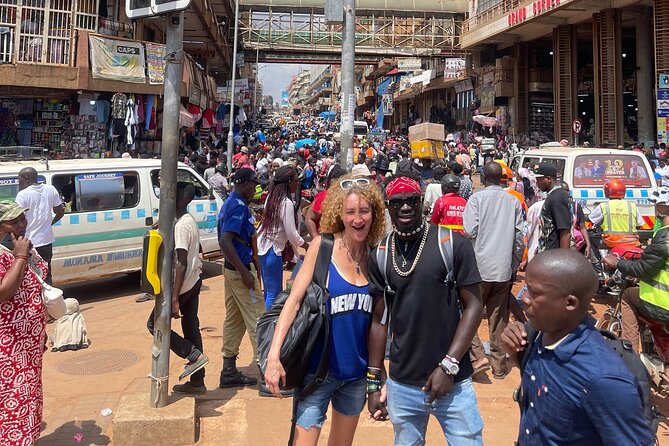
I would recommend this tour to you if you want history explained in person rather than viewed from the outside. It suits first-time visitors who need an introduction to Kampala, as well as people who want a clearer understanding of Buganda’s role in Uganda.
It is also a good choice for solo visitors. The private format means you are not placed in a large group, and the guide can adjust the conversation to your questions. A solo female visitor specifically found the experience reassuring and well organized, which is useful if you want support while seeing Kampala.
Families may appreciate the private vehicle and stroller access. The tour is also wheelchair accessible, and service animals are allowed. Still, the sites themselves can vary in how easy they are to move through, so it is sensible to confirm any specific mobility needs before booking.
This tour may be less suitable if you want a relaxed food tour, a long shopping stop, or a detailed museum visit. It is also not ideal if you prefer to avoid difficult political history, since the torture chambers are a central part of the palace visit.
Timing, transport, and small practical details
Meet at the post office in Kampala. The tour includes private transportation from place to place, but pickup details beyond the meeting point are not provided.
Wear comfortable clothing and shoes suitable for moving between historic sites. Bring water and money for admission fees, lunch, tips, and souvenirs. These are simple points, but they matter because the tour covers several stops and the included services are limited to transportation and the guiding experience.
Mobile ticketing makes the booking side easy. Confirmation is provided at the time of booking, and free cancellation is available if you cancel at least 24 hours before the start time. Cancellations or changes made within 24 hours are not refunded or accepted.
The tour has a perfect five-star rating from 50 ratings, with full recommendation from the people who rated it. The most consistent strengths are the guide’s explanations, the range of historical subjects, the safe feeling for solo visitors, and the chance to see both formal landmarks and ordinary city systems.
Should you book the Kampala Cultural Tour?
Book it if you want a focused introduction to Kampala, Buganda, and Uganda’s political past in one private outing. The combination of royal tombs, a palace, torture chambers, a mosque viewpoint, a national monument, and a taxi park gives you more context than a simple city drive.
The strongest reason to choose it is the guide. With Twaha or another member of his team, you can ask questions and connect the sites to clans, religion, kingship, and national history. The main cautions are extra admission costs, the uncertain three-to-five-hour timing, and the serious subject matter at the torture chambers.
For a first look at Kampala, I think the $55 price is fair, especially if you value private transport and clear local explanation. Keep your schedule flexible, bring extra money for fees and lunch, and book this tour if you want the city’s story rather than only its photo stops.
FAQ
How long does the Kampala cultural tour take?
The tour is described as lasting about three to four hours, while the highlights suggest it may take around five hours. Plan for roughly five hours so you are not rushed afterward.
Where do I meet the guide?
You meet the guide at the post office in Kampala.
Is transportation included?
Yes. Private transportation takes you between the stops, and only your group participates in the private activity.
Are admission fees included?
Admission is included at Gadaffi Mosque. The Independence Monument is free, while admission to Wamala King’s Tombs, Kasubi Tombs, and Kabaka’s Palace is not included.
Is the tour wheelchair and stroller accessible?
Yes. The tour is listed as wheelchair and stroller accessible. Service animals are also allowed.
Can I cancel for a full refund?
Yes, if you cancel at least 24 hours before the experience start time. Cancellations or changes made less than 24 hours before the start time are not refunded or accepted.
Just added around Kampala
- Kampala Pub Crawl | Uganda | 4 hours★ 5.0 · 4 reviews
- Kampala Guided walking Tour★ 5.0 · 4 reviews
- Kampala Urban Adventure – Walking Tour★ 5.0 · 3 reviews
- Day and Night City Tours in Kampala★ 5.0 · 4 reviews
- Kampala:Guided walking tour★ 5.0 · 7 reviews
- The best Kampala walking experience tour★ 3.7 · 4 reviews
- Kampala: Private Guided City Tour with vehicle Transfers★ 4.7 · 3 reviews
- Kampala: Luxury City Tour with Hotel Pickup and Drop-Off★ 5.0 · 3 reviews
Kampala Tours, compared.


Free Female Guided Walking Tours Kampala (3 Hours)
Read our review →Browse the lists this tour appears in