

Reviewed · EQUATOR TOURS
Private Guided Equator Tour Experience Uganda
The surprising part of Uganda’s equator stop is not the painted line itself. It is the simple water demonstration, where a guide shows water draining in different directions on either side of the equator, then straight down at 0 degrees latitude. It is a small roadside lesson, but it gives the stop a sense of place.
I like the private vehicle and pickup from Kampala, which save you from arranging transport to Kayabwe. I also like the chance to see villages and rural life along Masaka Road, with a guide such as Moses adding local context during the drive. The main drawback is the price: at $150 per person, it offers better value for a small private group than for a solo visitor.
Key points to know before booking
- The water experiment is the main event: See the Northern Hemisphere, Southern Hemisphere, and equator demonstrations in one stop.
- Kampala pickup is included: Round-trip transport takes the guesswork out of reaching Kayabwe.
- Expect a full day: The tour lasts about eight hours, with about two hours at Green Equator Masaka Road.
- The drive is part of the experience: Your guide can explain local life and point out villages beyond Kampala.
- Moses may guide your departure: He is specifically associated with warm, attentive service on the equator trip.
- The tour is fully private: Only your group takes part, so the pace and conversation are more personal.
Why Kayabwe’s equator stop is worth your time
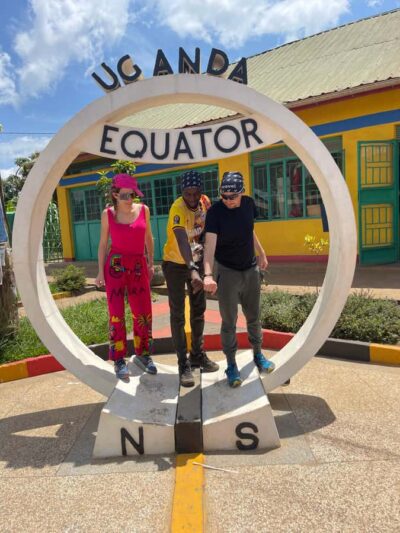
Uganda’s equator monument at Kayabwe is one of those sights that can look modest in a photograph but work well in person. You stand at the point marked as 0 degrees latitude, take pictures with one foot in each hemisphere, and watch a demonstration designed to show how water drains differently north and south of the line.
That makes the visit especially useful for a first trip to Uganda. You do not need a full day at the monument itself. The value comes from combining the stop with the road journey from Kampala, the rural views, and a local guide who can explain what you are seeing.
I would not book this as a grand historical site or a long museum visit. It is a compact, hands-on stop. The appeal is the easy photo, the playful science lesson, and the chance to get outside the capital without arranging every detail yourself.
The setting on Masaka Road also gives the trip a wider purpose. You pass through rural areas and villages, and the guide can point out details of daily life that you would likely miss from a self-drive car. That added context is important because the monument alone probably would not justify eight hours for everyone.
More stops at the equator line:
- Lake Mburo National Park with Equator, Game Drive & Cruise
★ 3.7 · 12 reviews - Discover the Magic of Uganda’s Equator on a 1-Day Tour
★ 5.0 · 12 reviews - Equator Tour (Airpals Safaris tour)
★ 5.0 · 9 reviews
Leaving Kampala for Kayabwe on Masaka Road

The tour includes pickup in Kampala and round-trip transfer, which is the clearest practical advantage. Kayabwe is outside the city, and a private transfer means you do not have to work out public transport connections or find the monument on your own.
The full experience lasts about eight hours. Since the listed stop itself takes about two hours, you should think of this as a full-day outing rather than a quick photo stop. The remaining time allows for the drive between Kampala and Kayabwe, plus any pauses connected with the day.
This matters when planning your schedule. I would not place the tour beside another fixed afternoon appointment, especially if you want time to stop for food or ask questions along the way. The day is designed to feel unhurried, but road travel can take a large share of the schedule.
A private tour also changes the feel of the journey. You can ask your guide about the villages you pass, local customs, and the meaning of the equator site without waiting for a large group to catch up. If your interests are photography, geography, or ordinary life outside Kampala, that flexibility adds real value.
Moses is the guide name connected with the equator day, and his role includes more than taking you to the monument. He has been described as considerate, attentive during the drive, and helpful with practical matters such as finding gifts and sorting out lunch. Those details matter on a long day in the car.
At Green Equator Masaka Road
The main stop is Green Equator Masaka Road, where the guide points out the exact 0-degree latitude crossing. You will be shown the Northern Hemisphere on one side and the Southern Hemisphere on the other, with the equator marked between them.
This is your best moment for photographs. The monument and line provide the obvious picture, but the most memorable images usually come from the simple act of standing across both hemispheres. If you want a certificate or a small souvenir, the equator stop is also associated with those keepsakes, although the supplied details do not specify what is included in the $150 price.
The visit lasts about two hours, which is enough time to see the demonstration, take photographs, listen to the explanation, and look around without turning the stop into an all-day affair. I like that balance. A shorter visit might feel rushed, while a much longer one could leave you wondering what else there is to do.
The site is not presented as a major cultural center or an extensive attraction. It is a focused stop built around one geographical idea. Keep your expectations in line with that. You are coming for the equator line, the water experiment, and the road experience, not for a large collection of exhibits.
The clockwise and counter-clockwise water demonstration
The water experiment is the part many people remember. The guide uses water and a container with a hole to show water draining clockwise in the Northern Hemisphere, counter-clockwise in the Southern Hemisphere, and straight down at the equator.
The demonstration is intentionally simple. You watch the guide move between the three positions, then compare the water’s motion. At 0 degrees latitude, the water is shown going directly down, which the guide presents as a practical way to understand the imaginary line crossing the world.
I like this because it turns an abstract map idea into something you can watch. Latitude lines can feel remote when you see them in a textbook. Here, you stand at the marker and see a physical demonstration tied to the place.
At the same time, I would treat it as an entertaining presentation rather than the sole reason to draw scientific conclusions. The information provided for this tour attributes the different directions to magnetic fields, and the guide explains it as proof of the equator. The experience is best enjoyed as a memorable roadside demonstration, with the geographical marker and local explanation providing the lasting value.
The guide also makes the activity feel personal. You can ask questions as the demonstration happens, rather than simply reading a sign and moving on. That is one reason the private format makes sense here: the attraction is small, so the quality of the explanation and the chance to interact become a large part of the visit.
A few more Uganda trips to weigh up
- Private 3 Day Gorilla Trekking Safari in Uganda
★ 5.0 · 36 reviews - 3 Day Private safari to Murchison Falls National Park with Big Five Experience
★ 5.0 · 21 reviews - Private Whitewater Tubing in Bujagali Hydropower Plant
★ 5.0 · 21 reviews - Private 3-Day Tour in Queen Elizabeth Park Safari
★ 5.0 · 17 reviews
What the drive adds to the day
The road from Kampala is not just a transfer between two points. It gives you a look at Uganda beyond the capital, with villages and rural scenes along the way. The information available does not promise specific sightseeing stops, so you should not book this expecting a long list of extra attractions.
Instead, consider the drive a moving introduction to the area around Kayabwe. Your guide can explain what you are seeing and answer questions about local life. That is useful if you want more than a quick photograph at the monument.
I particularly like this part for first-time visitors. Kampala can feel like a world of its own, and the equator trip lets you compare city life with the smaller communities along the route. You may find the ordinary details of the journey more revealing than the monument itself.
The private setup helps here. A large group tour often keeps conversation focused on departure times. On a private trip, you can ask Moses or another assigned guide to explain a village, a roadside activity, or a local custom when something catches your eye.
The tradeoff is time. Eight hours is a substantial commitment for one principal attraction. If you are already traveling west through Uganda, you may prefer to see the equator while moving between destinations. If Kampala is your base and you have a free day, the organized transfer makes the outing much easier.
Is $150 per person a fair price?
At $150 per person, the value depends heavily on group size. A solo visitor pays the full private-tour premium for personal transport, a guide, pickup, and the convenience of returning to Kampala. For two or more people, the price becomes easier to justify because the cost buys a private day rather than a shared seat.
The price also covers more than admission. The stop itself is listed as having free admission, so you are mainly paying for the vehicle, round-trip transfer, guide service, and the time involved in getting to and from Kayabwe. That distinction is important. You are not paying $150 for a ticket to a large attraction.
I see the strongest value for couples, families, or small groups who want a simple plan and personal attention. It is less convincing for budget-minded solo visitors who only want a photograph at the line. Those visitors may prefer to combine the equator stop with another route or arrange cheaper transport, if available.
The tour can also save you planning time. You do not have to arrange the road journey, find the monument, or decide how long to stay. That convenience has a price, but it may be worth it during a short Uganda visit when you want one easy day outside Kampala.
Food is not clearly included in the supplied details. One account connected with the tour describes Moses helping make sure lunch was handled, but I would still ask before booking what meal arrangements mean for your departure. Bring that question up early so the day does not catch you off guard.
Who should book this private equator tour?
I would recommend it most strongly to first-time visitors to Uganda who are staying in Kampala and want a straightforward day trip. The equator is an easy landmark to add to an itinerary, and the guide gives the visit more meaning than a quick independent stop.
It also suits anyone who enjoys small demonstrations and simple geographical facts. Children may like the water experiment, while adults may appreciate the chance to connect a familiar map line with a real place. The private format lets the guide adjust the explanation to your group.
Photography-minded visitors should also find plenty to like. The equator monument provides the expected picture, and the road offers opportunities to notice villages and countryside. You will want to keep expectations practical: this is not a dedicated photography workshop, and no special photo equipment or session is specified.
The tour may not suit you if you dislike spending much of a day in a vehicle for a short attraction. It may also feel expensive if you are traveling alone and do not care about having a private guide. In that case, the price is harder to defend.
Most travelers can participate, service animals are allowed, and the tour is near public transportation. The activity is private, so only your group takes part. Confirmation is provided at booking, and free cancellation is available if you cancel at least 24 hours before the local start time. A cancellation within 24 hours is not refunded, and changes inside that window are not accepted.
Practical ways to get more from the visit
Start by treating the day as a combination of transport, local conversation, and one main attraction. If you think of it only as a monument visit, the eight-hour schedule may seem too long. If you value the drive and the guide’s explanations, the outing makes more sense.
Ask about the exact pickup time, lunch plans, and what is included at the monument before you set off. The supplied details confirm pickup, but they do not specify the pickup area, meal cost, or whether souvenirs and certificates are included.
Leave room for photographs. The equator line is the reason for the trip, and rushing through the picture stop would defeat the purpose. Two hours at Green Equator Masaka Road gives you time to watch the demonstration and take the classic hemisphere photographs without racing away.
Use the drive to ask questions. Moses has been associated with local recommendations for gifts and food, so you can ask your guide for practical advice during the day. The private format is most useful when you take advantage of that conversation rather than sitting quietly through the entire transfer.
Finally, keep the water experiment in perspective. It is fun, visual, and easy to remember, but the larger experience is the combination of a famous geographical marker, a rural road journey, and a guide who helps connect the two.
Should you book it?
Book this tour if you want a private, low-stress day from Kampala and you value local explanation as much as the equator photograph. The combination of pickup, round-trip transport, a two-hour stop, and a guide such as Moses makes it a practical choice for first-time visitors and small groups.
Think twice if you are traveling alone on a tight budget or want a full day packed with major sights. The $150 price is primarily paying for private transport and service, while the equator attraction itself is compact.
For the right group, this is a pleasant and memorable introduction to Uganda beyond Kampala. The monument gives you the picture, the water experiment gives you the talking point, and the road gives the day its wider sense of place.
FAQ
How long does the private equator tour last?
The experience lasts approximately eight hours, including the journey from Kampala and the return transfer.
Where does the tour go?
The main stop is Green Equator Masaka Road at Kayabwe, where the equator line crosses 0 degrees latitude.
Is pickup from Kampala included?
Yes. The tour includes pickup and round-trip transfer from Kampala.
How long do you spend at the equator stop?
The listed visit at Green Equator Masaka Road lasts about two hours.
Is this a private tour?
Yes. Only your group participates in the activity.
What is the cancellation policy?
You can receive a full refund if you cancel at least 24 hours before the experience start time. Cancellations and changes made within 24 hours are not accepted, and the amount paid is not refunded.
Just added around Uganda
- Uganda: 2-Day Murchison Falls Park Safari with Boat cruise★ 5.0 · 7 reviews
- Uganda: 1-Day Murchison Falls Park Safari with Boat cruise★ 5.0 · 3 reviews
- Uganda Equator Tour From Kampala To Kayabwe★ 5.0 · 4 reviews
- 7 Days Fort Portal Culture Tour Western Uganda★ 5.0 · 6 reviews
- Coffee Tour Experience★ 5.0 · 5 reviews
- Hot Springs Exploration and Hike Craters★ 5.0 · 6 reviews
- Experience Chimpanzee Trekking in Budongo Forest★ 4.5 · 7 reviews
- 2 Days Abseiling and Rock Climbing★ 5.0 · 8 reviews
Equator Tours, compared.

Lake Mburo National Park with Equator, Game Drive & Cruise
Read our review →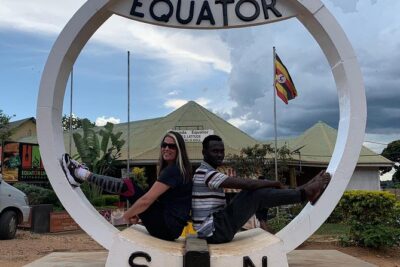
Discover the Magic of Uganda’s Equator on a 1-Day Tour
Read our review →


Browse the lists this tour appears in